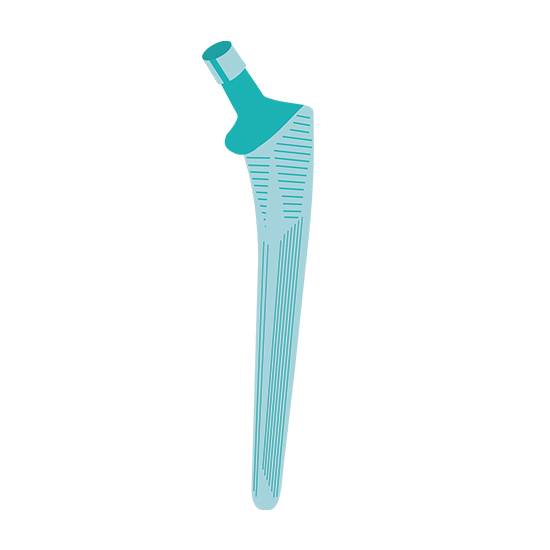
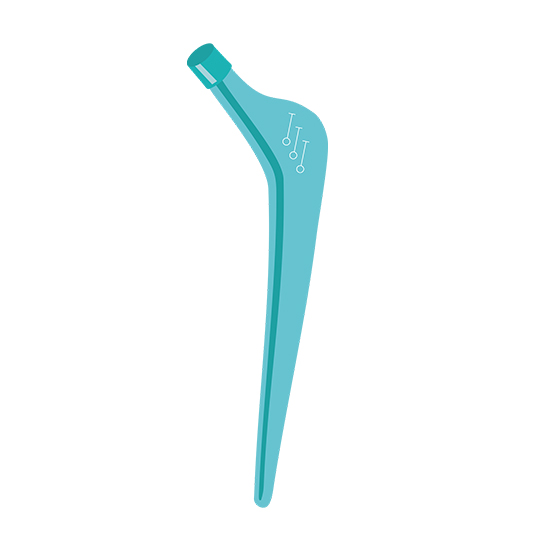
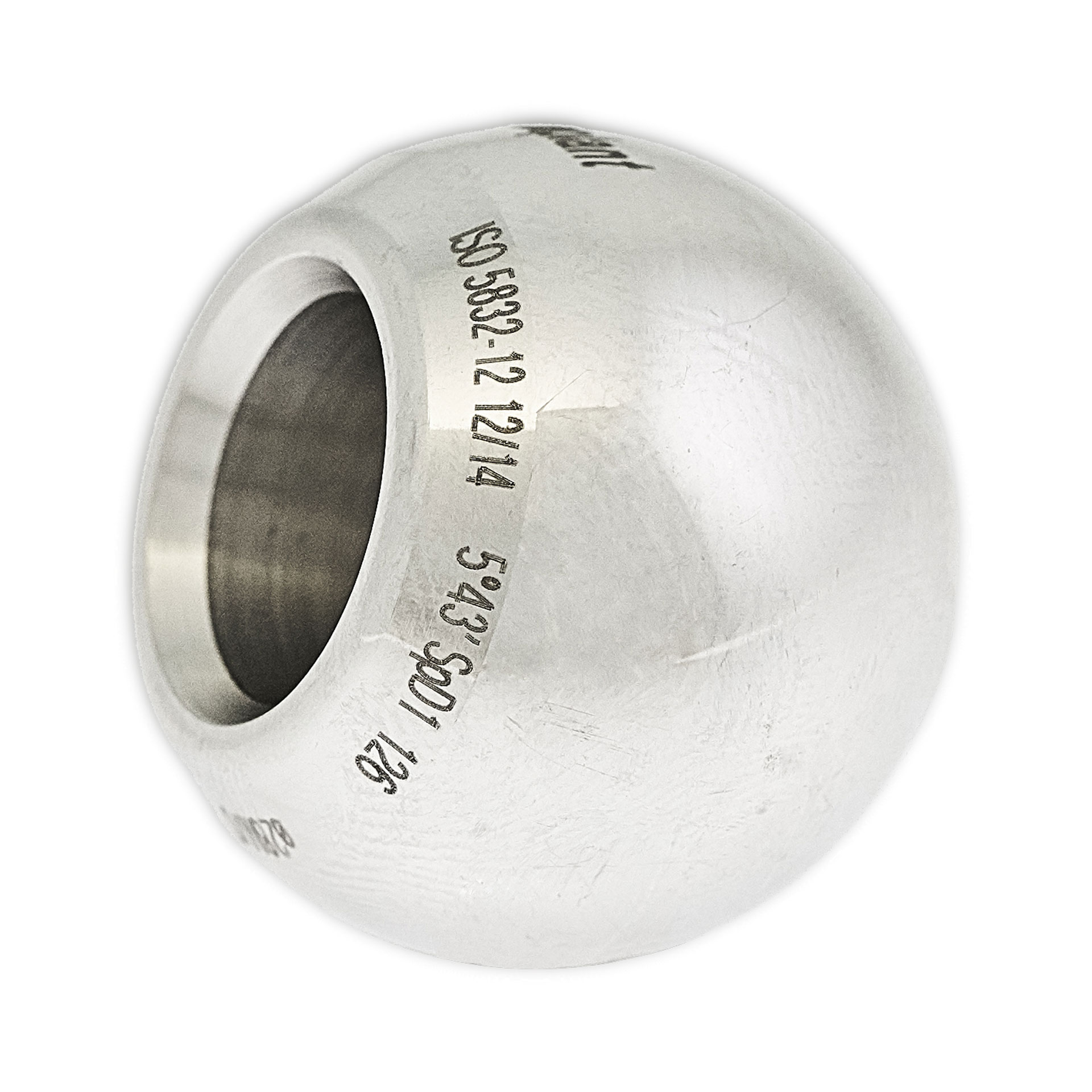
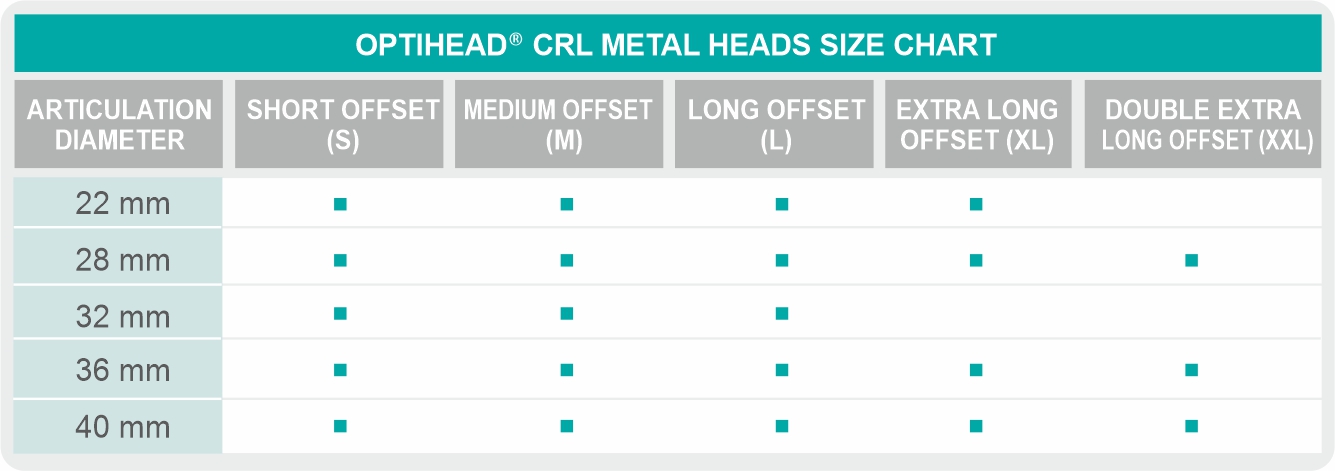
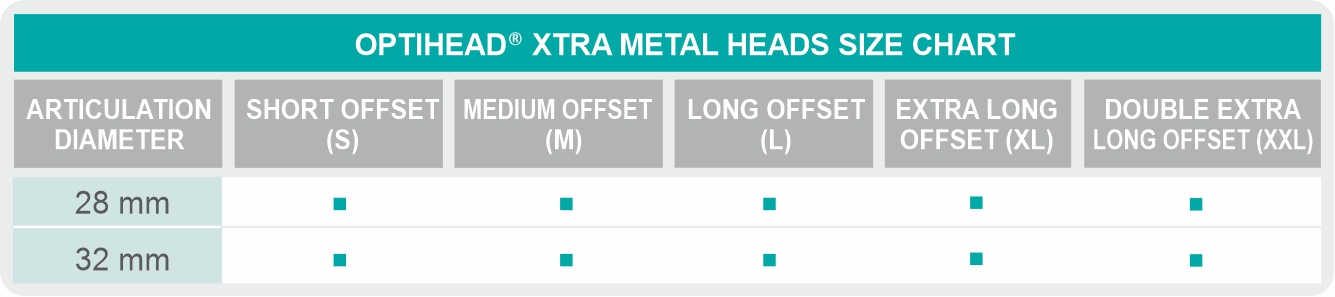
Orthimo offers femoral head options on four different materials – Medical grade Stainless Steel, Cobalt Chrome, and Ceramic (75% alumina and 25% zirconia) – with multiple offsets to accommodate all types of patients’ anatomies and surgeon philosophies.
Offset actual values varies between different articulation diameter. Please contact Orthimo for more information.
Ceramic Femoral Heads
Orthimo has been using the CoorsTek CeraSurf-p femoral heads which have been in clinical use for many years with surgeons successfully performing total hip replacement operations with ceramic heads in multiple countries and continents across the globe.
CoorsTek CeraSurf®-p is a state of the art material used for ceramic bearing surfaces in total hip arthroplasty. Comprised of an alumina matrix composite, CeraSurf®-p incorporates advanced toughening mechanisms to improve the performance of the material. CeraSurf®-p is proven to provide excellent wear performance and longevity for acetabular liners and femoral heads. Both biocompatible and stable, CeraSurf®-p offers favorable performance as compared to the leading ceramic material used for bearing surfaces in total hip arthroplasty.
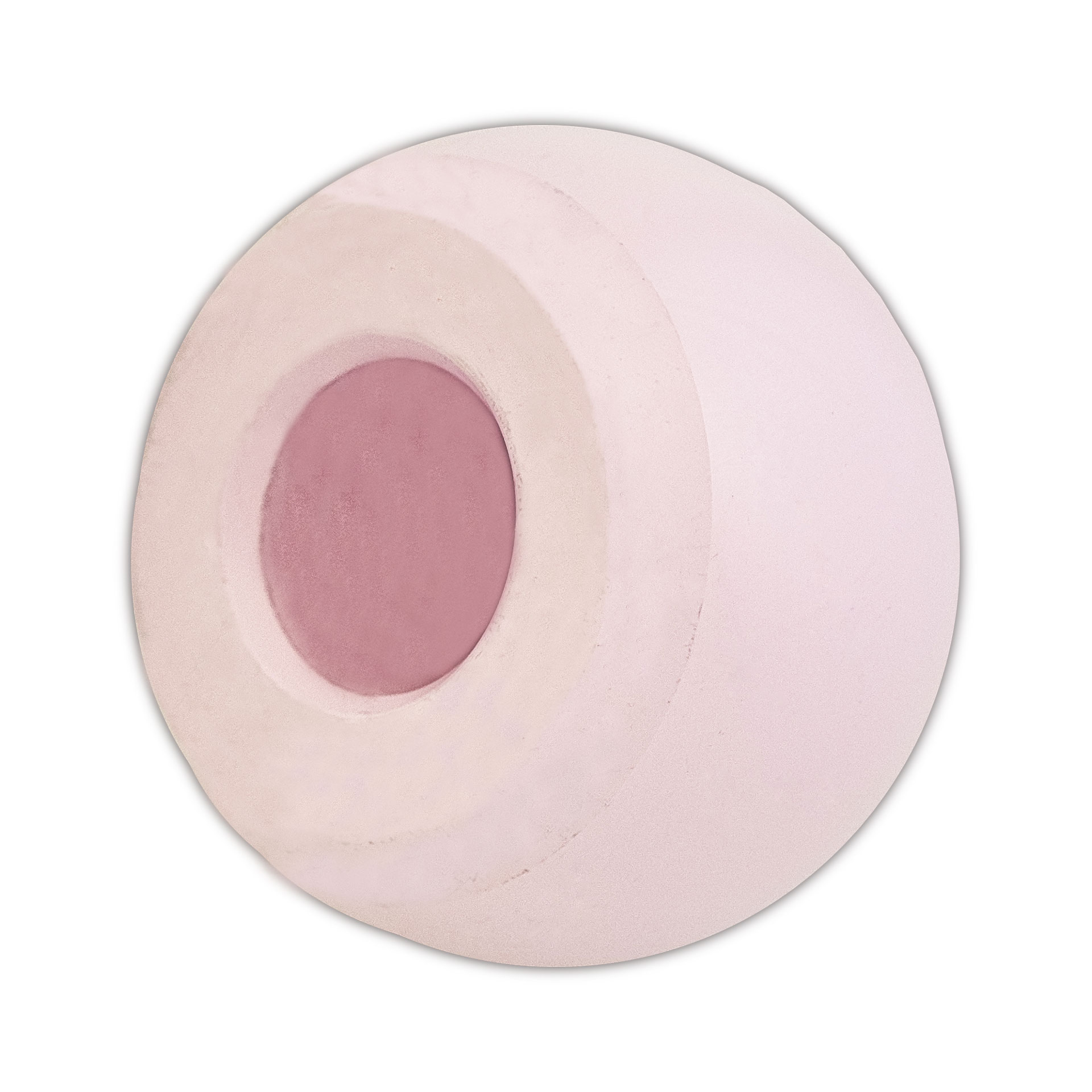
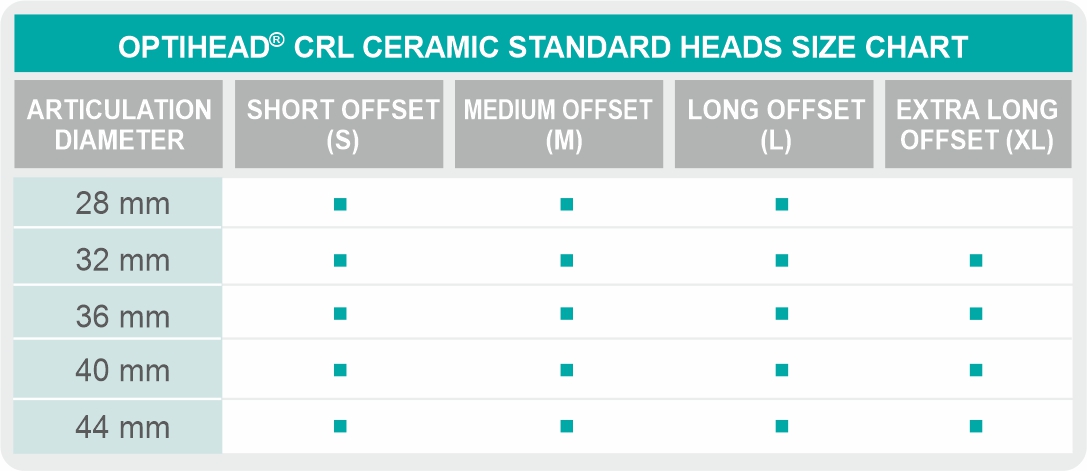
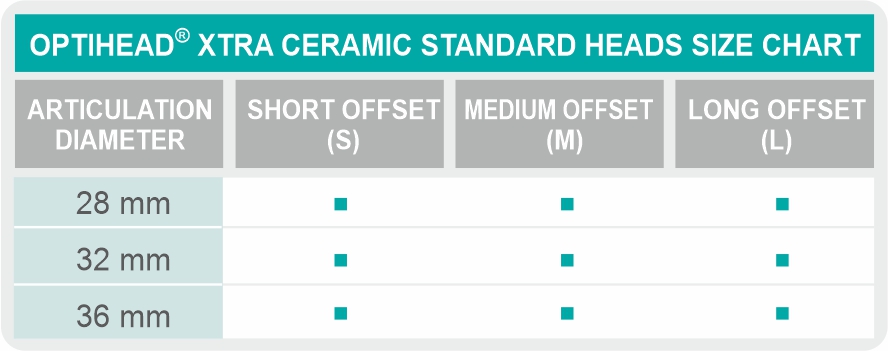
The Orthimo CoorsTek CeraSurf®-p ceramicheads are offered in the following variations based on their external diameter and offset:
A key benefit in using CeraSurf-p ceramic is the increased femoral head burst strength of 120 kN* versus 90 kN – 95 kN for the industry standard competitive material and well in excel of the 46 kN FDA minimum guidance. (*ISO 7206-10 using 28 mm 12/14 L femoral head on Titanium taper)
Key Advantages of CeraSurf-p include:
Increased burst strength
Platelet reinforced
Extreme low wear
Transformation toughening mechanism
Proven clinical history
Excellent biocompatibility
Substantial equivalence to industry standard ceramic technology
References
The use of dense alumina-alumina ceramic combination in total hip replacement Boutin P. et al; J Biomed Mater Res, 1988 Dec, 22:12, 1203-32
Powered alumina implants in the experimental animal: a histological study conducted in the rat. Di Silvestre M et al; Chir Organi Mov, 1991 Apr-Jun, 76(2): 167-72
A study of the mechanical and biological behavior of bioceramic hip arthroplasty followed-up after more than 10 years. Gualtieri G. et al, Chir Organi Mov, 1993 Oct-Dec, 78(4), 213-22
Tissue reaction to ceramic implant material Harms J, Mausle E; Journal of biomedical material research, Vol 13, n1, Gennaio 1979, p. 67
In Vitro reactions of human osteoblasts in culture with zirconia and alumina ceramics. Josset Y, OumHamed Z, Zarrinpour A, Lorenzato M, Adnet JJ, Laurent Maquin D; J Biomed Mater Res, 1999 Dec, 47:4, 481-93
Morphologic studies of the reaction of the subcutaneous in rats to implantation of porous ceramics. Kotz J et al; Polim Med 1989, 19:3, 119-25